Gujarati kankotri wording, with the traditional format and samples
15 min read · Updated
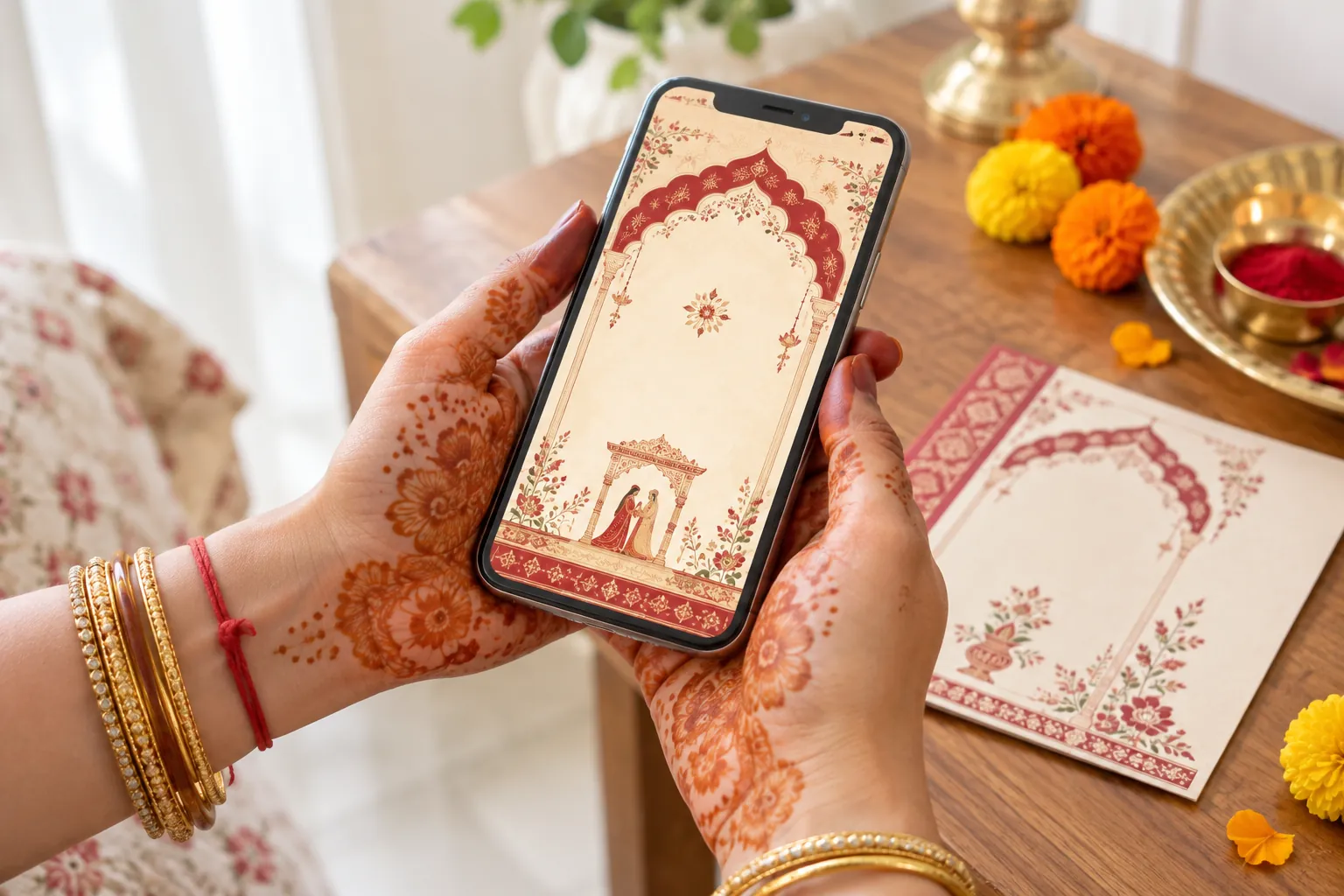
A Gujarati kankotri follows an order most families know by heart, even if nobody has written it down: the gods first, then the couple, then every function with its muhurat, and the children's tahuko right at the end. Below is that order, with wording in Gujarati and English you can copy and change the names in.
The order of a Gujarati kankotri
The name comes from kanku, the red powder, and many families still put a kanku mark on the first card and place it before Ganpati before any other card goes out. After that, the mosal (the mother's side) usually gets theirs in person. The card itself runs top to bottom like this:
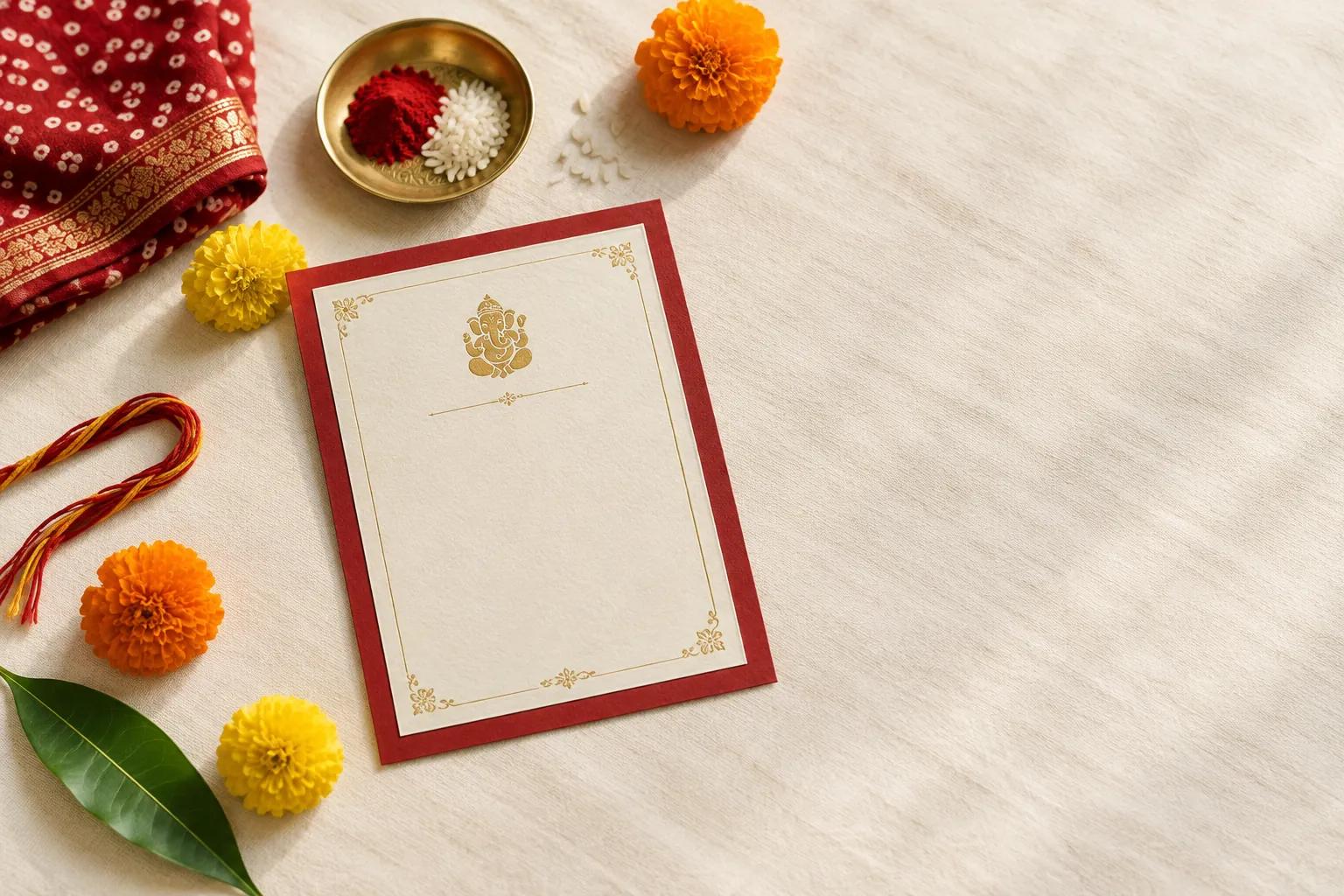
- Shri Ganeshay Namah at the top, then a line for the kuldevi. Write your own family goddess here: a Kutchi family might write Ashapura Mataji, others Ambe, Khodiyar or Chamunda. Many Jain families start with a line from the Navkar mantra instead.
- Shubh Lagna, as the heading.
- The invitation itself: whose daughter or son is marrying whom, with both sets of parents' names and the date.
- The functions, each with its day, time and place.
- The venue and the home address.
- The nimantrak, the person inviting you. This is the parents in many families, and the eldest living man, often the grandfather, in others.
- Swagat utsuk, the relatives who will be there to welcome you.
- The tahuko, a note from the children of the family.
Which gods are named, which functions happen and even their order differ between Patel, Brahmin, Jain, Kutchi and other families, and from one village to the next. Before you print or send, read the draft out to the eldest woman in the family. She will spot what is missing.
Kankotri lekhan: writing the first kankotri
Before any card goes out, the family writes the first kankotri by hand. It is addressed to Ganpati, marked with kanku and a few grains of rice, and placed in the home temple. Many families write a second one for the kuldevi. Elders of the house usually sit together for it, and only after this do the cards go to the mosal and then to everyone else.
How the first kankotri is written, and who writes it, changes from family to family. Ask the eldest at home how yours does it before the day.
Families often post a photo of the first card that day. A few captions for Instagram or a WhatsApp status:
કંકોત્રી લખાઈ ગઈ, હવે લગ્નની તૈયારી શરૂ! 🙏 પહેલી કંકોત્રી ગણપતિ બાપ્પાને. હવે રિયા અને કબીરના લગ્નની રાહ! 🌼
Kankotri lakhai gai, have lagna ni taiyari sharu! 🙏 The first kankotri is with Ganpati Bappa. Riya and Kabir's countdown starts today. Kanku, rice and the very first card. It's really happening! 🌼
More captions, the text to write on the first kankotri for Ganpati, and a message inviting family to the lekhan are in our kankotri lekhan guide.
Gujarati kankotri wording sample: the full lekhan to copy
Kankotri lekhan is simply the text of the card, written out in full. This one is from the bride's side. Riya Shah of Ahmedabad is marrying Kabir Mehta of Vadodara. The bride is written as ચિ. સૌ. કાં., and the groom as ચિ. Many families also add the Vikram Samvat date and tithi from the priest's paper under the English date.
॥ શ્રી ગણેશાય નમઃ ॥ ॥ શ્રી કુળદેવી માતાજી પ્રસન્ન ॥ શુભ લગ્ન સ્નેહી શ્રી, પરમ કૃપાળુ પરમાત્માની કૃપાથી અમારી સુપુત્રી ચિ. સૌ. કાં. રિયાના શુભ લગ્ન વડોદરા નિવાસી શ્રી રાજેશભાઈ મનુભાઈ મહેતા તથા શ્રીમતી કલ્પનાબેન મહેતાના સુપુત્ર ચિ. કબીર સાથે રવિવાર, તા. ૭-૨-૨૦૨૭ના શુભ દિને નિર્ધાર્યા છે. આ શુભ પ્રસંગે આપ સહકુટુંબ પધારી નવદંપતીને આશીર્વાદ આપવા ભાવભર્યું આમંત્રણ છે. શુભ પ્રસંગો ગણેશ સ્થાપના અને મંડપ મુહૂર્ત: શુક્રવાર, તા. ૫-૨-૨૦૨૭, સવારે ૯:૩૦ કલાકે (નિવાસસ્થાને) મહેંદી અને રાસ-ગરબા: શુક્રવાર, તા. ૫-૨-૨૦૨૭, સાંજે ૭:૩૦ કલાકે પીઠી: શનિવાર, તા. ૬-૨-૨૦૨૭, સવારે ૧૦:૦૦ કલાકે મામેરું: શનિવાર, તા. ૬-૨-૨૦૨૭, બપોરે ૧૨:૦૦ કલાકે જાન આગમન: રવિવાર, તા. ૭-૨-૨૦૨૭, સાંજે ૫:૦૦ કલાકે હસ્તમેળાપ: સાંજે ૬:૪૭ કલાકે ભોજન સમારંભ: રાત્રે ૮:૦૦ કલાકે લગ્ન સ્થળ: કેસર પાર્ટી પ્લોટ, થલતેજ, અમદાવાદ નિવાસસ્થાન: ૧૨, શાંતિકુંજ સોસાયટી, પાલડી, અમદાવાદ નિમંત્રક શ્રી હેમંતભાઈ રમણલાલ શાહ શ્રીમતી નીતાબેન હેમંતભાઈ શાહ સ્વાગત ઉત્સુક શ્રી રમણલાલ શાહ તથા શ્રીમતી સરલાબેન શાહ શ્રી ધવલભાઈ શાહ તથા શ્રીમતી પૂજાબેન શાહ સમસ્ત શાહ પરિવાર
Shri Ganeshay Namah Shri Kuldevi Mataji Prasann Shubh Lagna Dear family and friends, By the grace of God, the wedding of our daughter Riya with Kabir, son of Shri Rajeshbhai Manubhai Mehta and Smt. Kalpanaben Mehta of Vadodara, is fixed for Sunday, 7 February 2027. Please come with your family and bless the couple. Ganesh Sthapana and Mandap Muhurat: Friday 5 February, 9:30 am, at home Mehndi and Raas Garba: Friday 5 February, 7:30 pm Pithi: Saturday 6 February, 10 am Mameru: Saturday 6 February, 12 noon Jaan Aagman: Sunday 7 February, 5 pm Hast Melap: 6:47 pm Bhojan Samaroh: 8 pm Venue: Kesar Party Plot, Thaltej, Ahmedabad Nimantrak Shri Hemantbhai Ramanlal Shah Smt. Nitaben Hemantbhai Shah Swagat Utsuk Shri Ramanlal Shah and Smt. Saralaben Shah Shri Dhavalbhai Shah and Smt. Poojaben Shah The whole Shah family
Each man's middle name is his father's, the Gujarati way: Hemantbhai Ramanlal Shah is Hemant, son of Ramanlal. Elders read it to place the family, so keep it.
Gujarati wedding functions and muhurat times
Times on a kankotri are often printed to the minute, like 6:47 pm, because the priest worked out the muhurat. Guests know the meal follows the hast melap, so that one time matters most. Here is what each function is, in the order most families hold them:
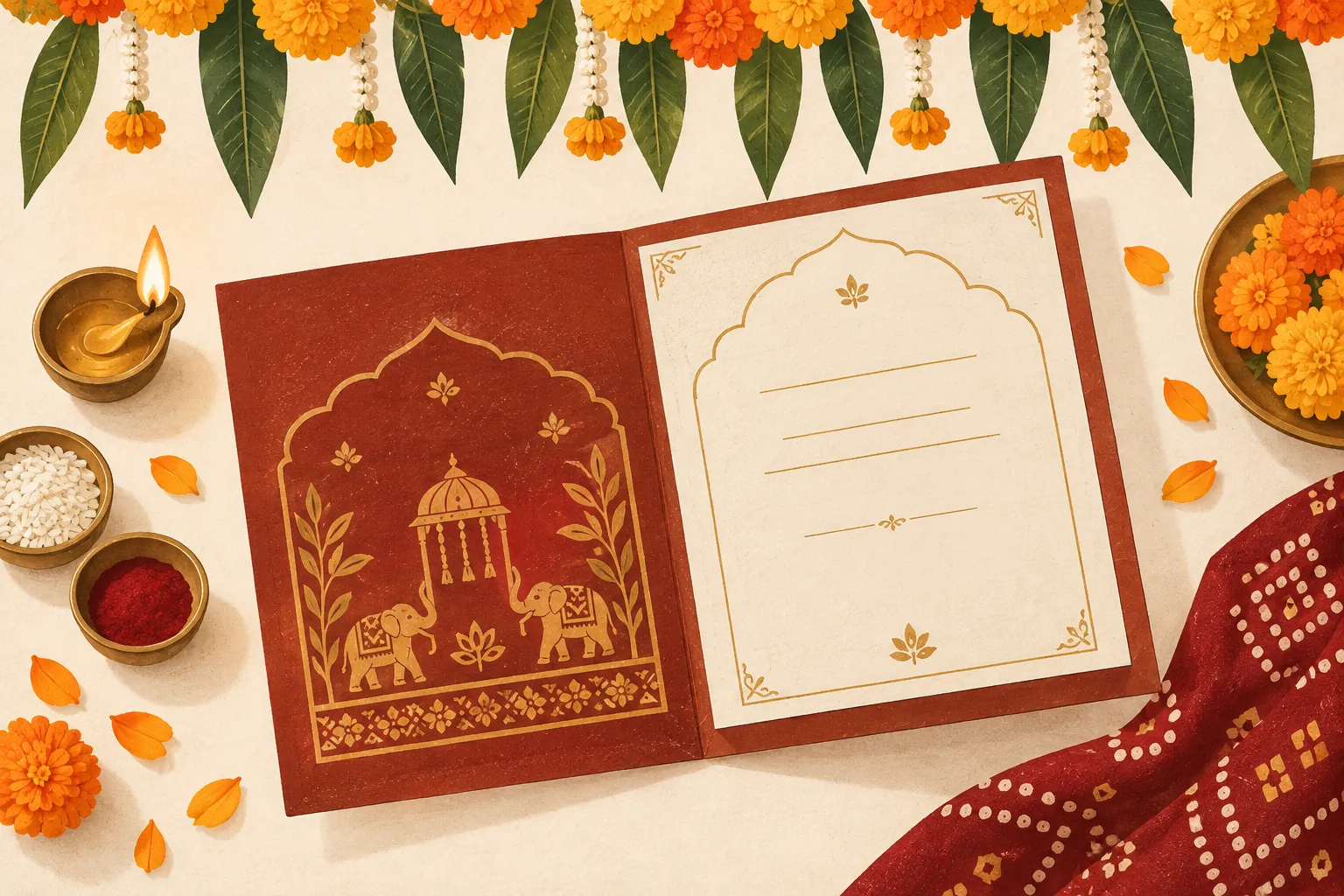
- Ganesh Sthapana: the first puja, at home, to begin the wedding.
- Mandap Muhurat: the first post of the mandap is set up with a small puja, usually the same morning.
- Pithi: turmeric paste for the bride or groom, at home.
- Mehndi: henna for the bride.
- Sanji: an evening of wedding folk songs sung by the women of the family. Many families now fold it into the garba night or a sangeet.
- Raas Garba or Dandiya Raas: the dance night, with a dhol.
- Mameru: the mosal, led by the mama, brings clothes and jewellery for the bride or groom. For a bride this often includes the panetar saree.
- Jaan Prasthan: the groom's wedding party leaves his home. Jaan Aagman is its arrival at the bride's venue, where her mother welcomes the groom.
- Hast Melap: the couple's hands are joined, the heart of the wedding.
- Bhojan Samaroh: the meal.
- Swagat Samaroh: the reception, usually hosted by the groom's family after the wedding.
Each side prints only its own functions. The groom's family card has the jaan leaving, not arriving, and usually the reception too:
વરપક્ષ: મહેતા પરિવાર, વડોદરા ગણેશ સ્થાપના અને મંડપ મુહૂર્ત: શુક્રવાર, તા. ૫-૨-૨૦૨૭, સવારે ૯:૦૦ કલાકે સાંજી: શુક્રવાર, તા. ૫-૨-૨૦૨૭, રાત્રે ૮:૩૦ કલાકે પીઠી: શનિવાર, તા. ૬-૨-૨૦૨૭, સવારે ૯:૩૦ કલાકે મામેરું: શનિવાર, તા. ૬-૨-૨૦૨૭, બપોરે ૧૧:૩૦ કલાકે દાંડિયા રાસ: શનિવાર, તા. ૬-૨-૨૦૨૭, રાત્રે ૯:૦૦ કલાકે જાન પ્રસ્થાન: રવિવાર, તા. ૭-૨-૨૦૨૭, બપોરે ૧:૦૦ કલાકે (વડોદરાથી અમદાવાદ) સ્વાગત સમારંભ: સોમવાર, તા. ૮-૨-૨૦૨૭, સાંજે ૭:૩૦ કલાકે, વડોદરા
Tahuko lines for the kankotri
The tahuko is the line everybody reads first, even though it is printed last. It is written as if a small child in the family is calling you to the wedding, signed with their name. On the bride's side, her brother's child calls her foi; on the groom's side, his sister's child calls him mama.
ટહુકો મારા ફોઈના લગ્નમાં જરૂર જરૂર આવજો હોં! લિ. આરવ મારા મામાના લગ્નમાં વહેલા વહેલા આવજો, આપણે સાથે દાંડિયા રમીશું. લિ. મિષ્ટી
Please, please come to my Foi's wedding! Aarav Come early to my Mama's wedding, we'll play dandiya together. Mishti
Mara foi na lagna ma jaroor jaroor aavjo ho! Li. Aarav Mara mama na lagna ma vahela vahela aavjo, aapne saathe dandiya ramishu. Li. Mishti
If there are several children, sign it from all of them. Leaving a cousin out is the kind of thing an aunt remembers for years.
Tahuko for a girl's wedding
On the bride's kankotri the tahuko comes from whoever she has spoilt most: her brother's children call her foi, her sister's children call her masi, and a younger brother or sister calls her motiben or didi.
મારી વ્હાલી ફોઈના લગ્નમાં આપ સૌ જરૂરથી પધારજો. ફોઈ સાસરે જાય એ પહેલાં આપણે ખૂબ મજા કરીશું! લિ. આરવ મારી માસીના લગ્નમાં વહેલા વહેલા આવજો, મારે તમને મારી નવી ચણિયાચોળી બતાવવી છે. લિ. કાવ્યા મોટી બેનના લગ્નમાં ગરબા રમવા જરૂર આવજો, હું પહેલી હરોળમાં હોઈશ! લિ. ધ્રુવ
Please come to my dear Foi's wedding. We'll have lots of fun before she goes off to her new home! Aarav Come early to my Masi's wedding, I want to show you my new chaniya choli. Kavya Come play garba at my big sister's wedding. I'll be in the front row! Dhruv
More lines for the bride's kankotri. The vidaai line suits families who like it tender; the garba ones suit everyone else:
ફોઈના લગ્નમાં વહેલા વહેલા આવજો હોં! લિ. તીર્થ મારી માસીના લગ્નમાં મહેંદી મુકાવવા વહેલા આવજો! લિ. ઝીલ દીદીના લગ્નમાં રાસ-ગરબાની રમઝટ જામશે, તમે નહીં આવો તો મજા નહીં આવે! લિ. જય ફોઈના માંડવે ગીતો ગાવા અને ગરબે ઘૂમવા જરૂર આવજો. લિ. માહી મારી ફોઈ સાસરે જાય છે. એમને હસતા મોઢે વિદાય આપવા આપ સૌ જરૂર પધારજો. લિ. અન્વી
Foi na lagna ma vahela vahela aavjo ho! Li. Tirth Mari masi na lagna ma mehndi mukavva vahela aavjo! Li. Jheel Didi na lagna ma raas-garba ni ramzat jamshe, tame nahi aavo to maja nahi aave! Li. Jay Foi na mandve geeto gava ane garbe ghumva jaroor aavjo. Li. Mahi Mari foi sasre jaay chhe. Emne hasta modhe vidaay aapva aap sau jaroor padharjo. Li. Anvi
Tahuko for a boy's wedding
On the groom's side the children are his sister's, who call him mama, and his brother's, who call him kaka. Groom-side tahuko lines are usually about the jaan, since that is the part the children wait for.
મારા મામાના લગ્નમાં જરૂર જરૂર આવજો, આપણે સાથે મામીને લેવા જઈશું! લિ. મિષ્ટી મારા કાકાની જાનમાં નાચવા વહેલા આવજો, ઢોલવાળા તો આવી ગયા છે! લિ. વિહાન મોટાભાઈના લગ્નમાં ભાભીને લેવા જાનમાં સાથે આવજો, હું ઘોડીની બાજુમાં જ ચાલીશ. લિ. ખુશી
Please, please come to my Mama's wedding, we're all going together to bring Mami home! Mishti Come early to dance in my Kaka's jaan. The dhol is already here! Vihaan Join the jaan when my big brother goes to bring Bhabhi home. I'll be walking right next to the ghodi. Khushi
More lines for the groom's kankotri, from short to sweet. Pick one or two and change the names:
મામાના લગ્નમાં જલ્દી જલ્દી આવજો! લિ. વેદ મામા સાથે ઘોડી પર હું બેસવાનો છું, તમે નીચે નાચવા જરૂર આવજો! લિ. રેયાંશ કાકાના લગ્નમાં મારે નવી શેરવાની પહેરવી છે, તમે જોવા જરૂર આવજો. લિ. અયાન અમારા ઘરે નવા કાકી આવે છે! એમનું સ્વાગત કરવા આપ સૌ જરૂર પધારજો. લિ. પ્રિશા મામાનું ઘર હવે મામીથી શોભશે. એ શુભ ઘડીએ આપ સહકુટુંબ પધારજો. લિ. ધ્રુવી ભાઈના લગ્નમાં ભાભીને લેવા જઈએ છીએ, આપના આશીર્વાદ વગર કેમ ચાલે? જરૂર આવજો. લિ. નાની બેન નિશા
Mama na lagna ma jaldi jaldi aavjo! Li. Ved Mama sathe ghodi par hu besvano chhu, tame niche nachva jaroor aavjo! Li. Reyansh Kaka na lagna ma mare navi sherwani pahervi chhe, tame jova jaroor aavjo. Li. Ayaan Amara ghare nava kaki aave chhe! Emnu swagat karva aap sau jaroor padharjo. Li. Prisha Mama nu ghar have mami thi shobhshe. E shubh ghadie aap sahakutumb padharjo. Li. Dhruvi Bhai na lagna ma bhabhi ne leva jaiye chhiye, aapna aashirvad vagar kem chale? Jaroor aavjo. Li. Nani ben Nisha
Funny tahuko lines
A funny tahuko works when it sounds like something the child would really say. Tease the bride or groom gently, never the other family, because their side reads it too.
આખરે મારા મામા પરણે છે! આવો મોકો ફરી નહીં મળે, જરૂર આવજો. લિ. જીયા ફોઈના લગ્નમાં મીઠાઈ હું જ પીરસવાનો છું, મોડા આવશો તો કંઈ નહીં બચે! લિ. આરવ કાકા કહે છે કે લગ્ન પછી એ સુધરી જશે. એ જોવા તો આવવું જ પડશે! લિ. વિહાન મમ્મી કહે છે કે બધા આવશે તો જ મને નવા કપડાં મળશે, એટલે પ્લીઝ આવજો! લિ. કાવ્યા
My Mama is finally getting married! A chance like this won't come again, so do come. Jiya I'm serving the sweets at Foi's wedding. Come late and there won't be any left! Aarav Kaka says he'll behave after the wedding. You have to come and see that! Vihaan Mummy says I only get new clothes if everyone comes, so please come! Kavya
Tahuko in English
"Tahuko in English" can mean two things: the Gujarati line written in English letters, for WhatsApp and for cousins who speak Gujarati but don't read it, or the line translated, for friends who don't speak it at all. Here are both, for a girl's and a boy's kankotri.
Mari vhali foi na lagna ma aap sau jaroor thi padharjo. Foi sasre jaay e pehla aapne khub maja karishu! Li. Aarav Mari masi na lagna ma vahela vahela aavjo, mare tamne mari navi chaniya choli batavvi chhe. Li. Kavya
Mara mama na lagna ma jaroor jaroor aavjo, aapne saathe mami ne leva jaishu! Li. Mishti Mara kaka ni jaan ma nachva vahela aavjo, dhol vala to aavi gaya chhe! Li. Vihaan
Aakhre mara mama parne chhe! Aavo moko fari nahi male, jaroor aavjo. Li. Jiya Foi na lagna ma mithai hu j pirasvano chhu, moda aavsho to kai nahi bache! Li. Aarav
Please come to my dear Foi's wedding. We'll have lots of fun before she goes off to her new home! Aarav Please, please come to my Mama's wedding, we're all going together to bring Mami home! Mishti My Mama is finally getting married! A chance like this won't come again, so do come. Jiya
A short kankotri message for WhatsApp
The full kankotri is too long for a chat bubble. Send a few warm lines with the greeting your family uses, Jai Shri Krishna in many Vaishnav homes and Jai Jinendra in Jain ones, and put the link last.
જય શ્રી કૃષ્ણ 🙏 અમારી દીકરી રિયાના લગ્ન કબીર સાથે રવિવાર, ૭ ફેબ્રુઆરીએ અમદાવાદમાં છે. બધા પ્રસંગોનો સમય અને સ્થળનો નકશો આ કંકોત્રીમાં છે. આપ સહકુટુંબ જરૂર પધારજો. હેમંતભાઈ અને નીતાબેન શાહ riya-kabir.invitationtales.com
Jai Shri Krishna 🙏 Our Riya is marrying Kabir on Sunday, 7 February, in Ahmedabad. Every function, its time and the map are on the kankotri below. Please come with the whole family. Hemantbhai and Nitaben Shah riya-kabir.invitationtales.com
For more ways to word these, by who you are sending to, see WhatsApp wedding invitation messages.
Putting a kankotri on a wedding website
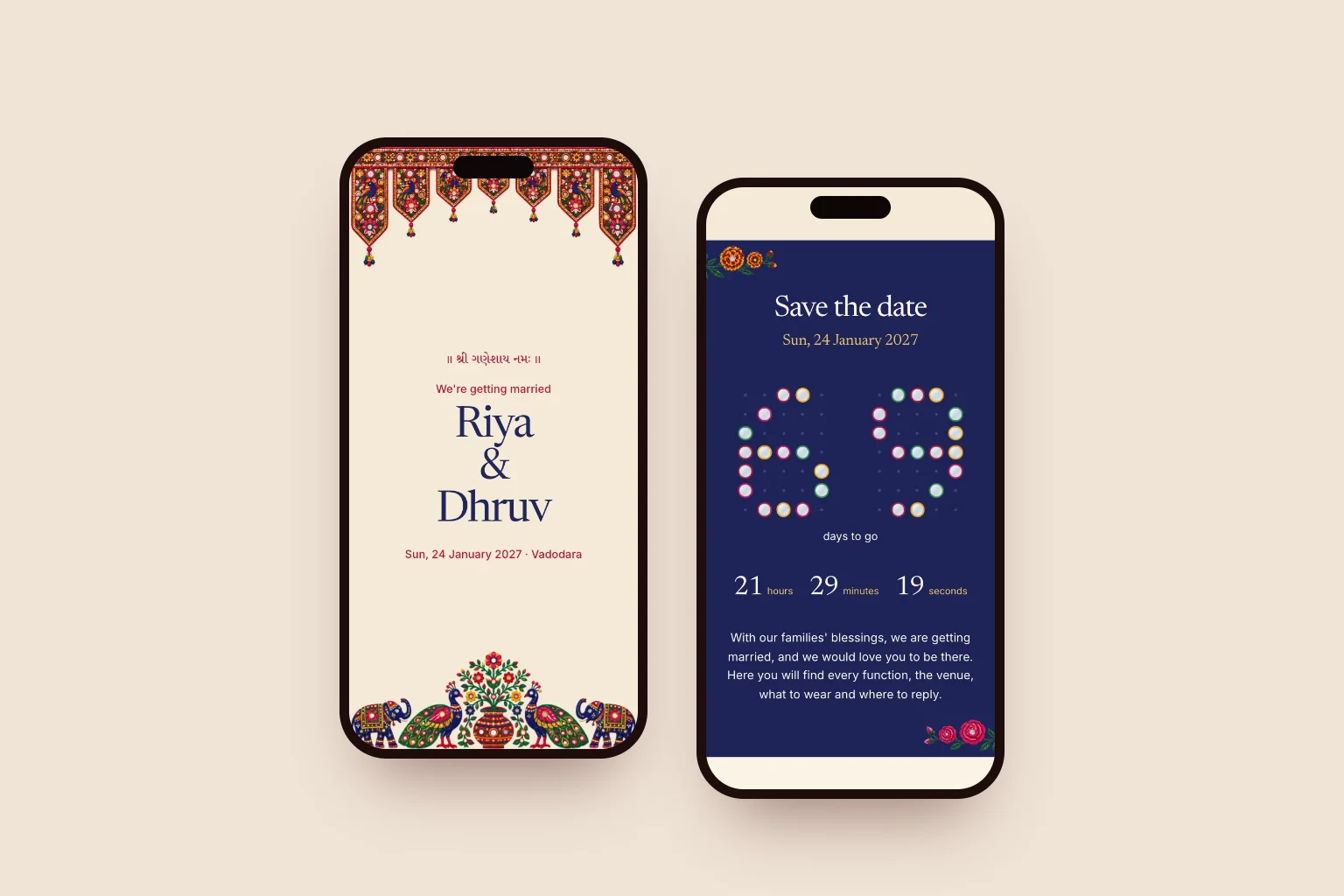
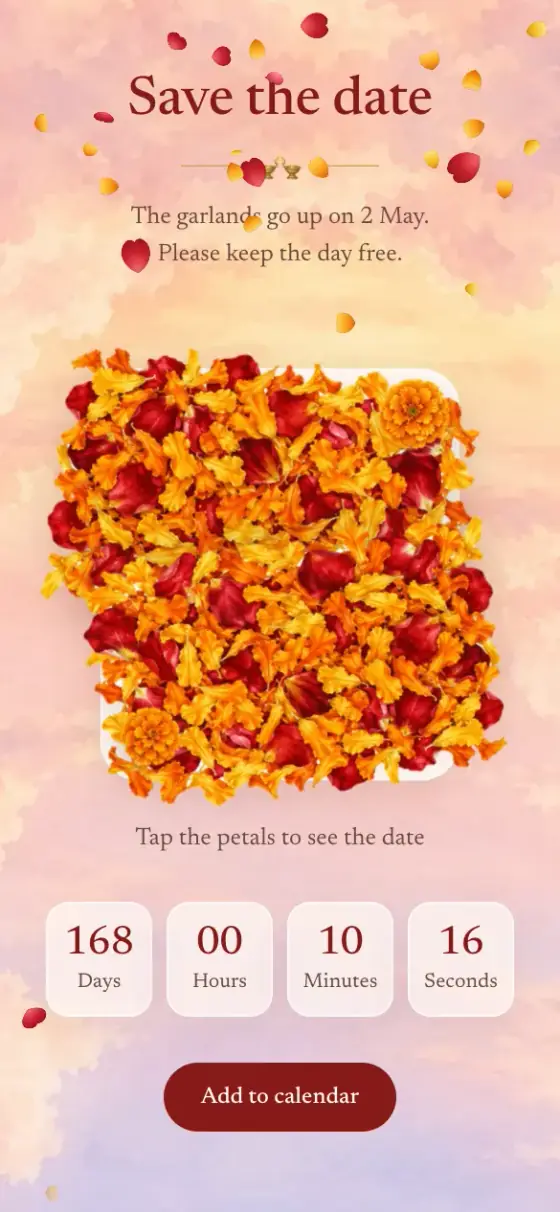
On a website, each function becomes its own card with its time and a map, so the mosal can find the mameru at home and the jaan bus driver can find the party plot. Guests reply for each function, and you see how many are coming to the garba and how many only to the hast melap.
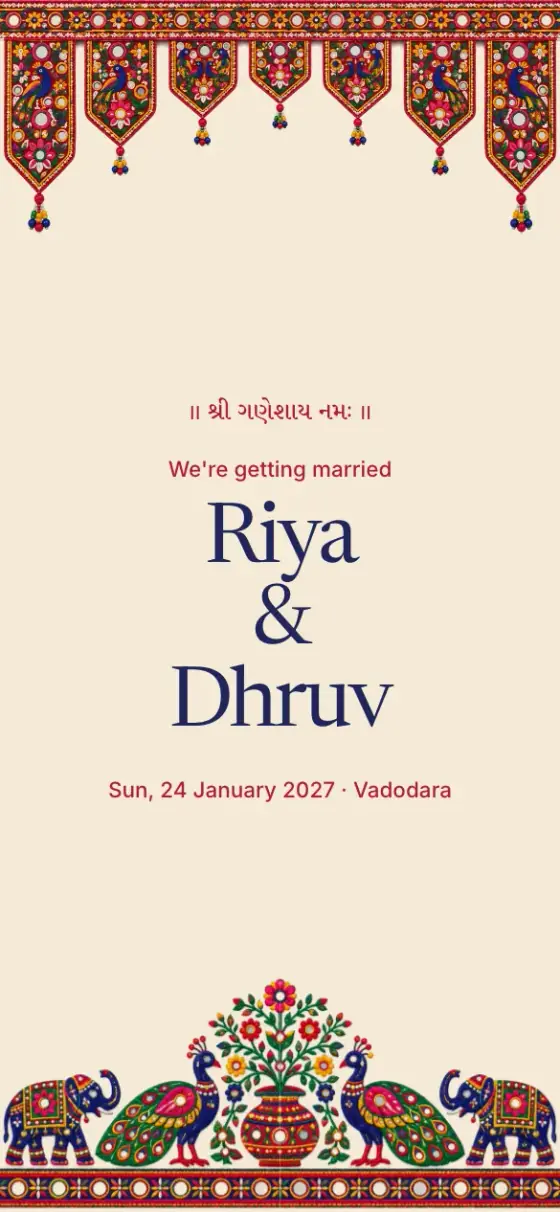
Keep the top of the page as it is on paper: Shri Ganeshay Namah, the kuldevi line and Shubh Lagna. Put the tahuko at the very end, where people look for it. If the priest moves a muhurat by twenty minutes, you change it once and everyone who opens the link sees the new time. If you want the page to feel like Gujarat, the Kutch Mirror Work design opens with an embroidered toran dropping in over your names, and hangs each function from it like a flap of the toran.